



In the northern Lebanese town of Zgharta, Brazilian flags hung from balconies and stone alleyways as families prepared for Brazil’s Round of 32 FIFA World Cup match against Japan.
Children wearing yellow jerseys played football in the streets, while cafés and public squares filled with supporters draped in green and yellow, reflecting a passion for Brazil that stretches across Lebanon.
The connection between the two countries runs deep. Government estimates say between 7 million and 10 million Brazilians have Lebanese ancestry, more than Lebanon’s population of about 6 million.
Those family and cultural ties, shaped by over a century of migration, have helped make Brazil one of the most widely supported national football teams across Lebanon.
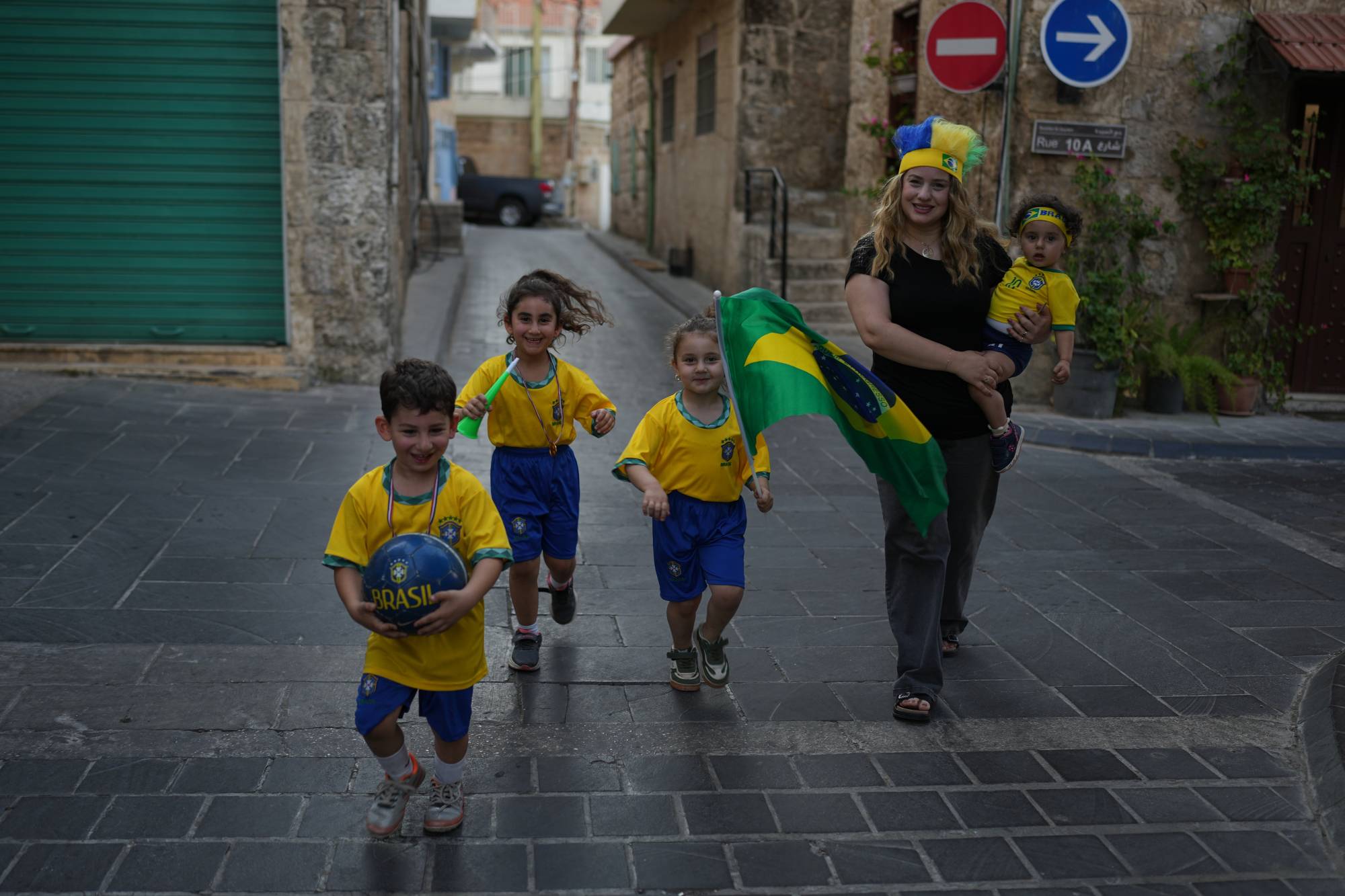
For many Lebanese fans, Brazil’s attacking style of play, flair and history of producing legendary players have also inspired generations of supporters, passing that passion from parents to their children.
As kickoff approached, drums echoed through the streets and fans gathered around screens to cheer every attack.
“Today we had to work a bit for the win, but I was sure we were going to win,” said Brazil supporter Bagus Fadlallah. “We’re Brazil, and we’ll show everyone what Brazil is really made of.”
After Brazil’s victory, supporters in villages and cities across Lebanon took to the streets, waving Brazilian flags, beating drums and celebrating a team many Lebanese have supported for generations.
DR Congo’s long road to a first World Cup in 52 years has been beset by challenges that their English opponents in the last 32 on Wednesday could scarcely imagine.
Despite having to navigate 13 qualifiers, a pre-tournament quarantine due to an Ebola outbreak and the instability caused by decades of conflict, the war-torn nation is making its mark on the global stage.
“It’s not easy in our country,” said Yoane Wissa after his two goals secured his nation’s first World Cup win against Uzbekistan and a meeting against England, where the Newcastle striker has played his club football for the past five years.
That is by no means the only English connection in the squad.
Aaron Wan-Bissaka was born in London and played for England to under-21 level.
Axel Tuanzebe also represented the Three Lions at youth level and could come up against his former schoolmate and teammate Marcus Rashford in Atlanta.
Of the 26-man squad, 20 were born outside of Congo — the majority, like Wissa, in France.
The battle for the mineral-rich East Congo has sparked a decades-long conflict between a litany of armed groups and forced families to flee, seeking security in Europe.
“There’s a war in East Congo. Every day, every time we wear this shirt, we think about them,” added Wissa.
“Because we want peace and for them, I just say ‘thank you’. Thank you because we came from far. We came from nothing to be here. Now we write our story with a black pen and we need to be proud.”
The roots of an inspiring story on the field come from that tragic backdrop.
Sourcing and recruiting dual-national players has become crucial for smaller nations to punch above their weight in international football.
– ‘New generation wants to help’ –
Wan-Bissaka was one of those who initially needed some convincing.
Signed by Manchester United for £50 million ($66 million) when just 21, DR Congo swooped when the England career he imagined he would have failed to materialize.
But as the Leopards’ star has risen, players are becoming increasingly keen to join the Congolese cause.
Noah Sadiki represented Belgium at youth level and would almost certainly now be a mainstay for the Red Devils had the Sunderland midfielder not switched allegiance.
“There is a new generation that wants to help the people of the country,” Sadiki told French sports paper L’Equipe.
Competing as Zaire in 1974, the country’s only previous World Cup ended in embarrassment with 14 goals conceded in three defeats.
Over half a century on, Congo’s new generation have given a nation reason to dream.
The outbreak of Ebola that has claimed more than 300 lives had had an impact on the team’s World Cup preparations.
The United States imposed a 21-day isolation period on players in Belgium before they were allowed to enter.
Their most famous fan Michel Nkuka Mboladinga — known for his statue-like pose honoring the country’s first prime minister Patrice Lumumba — was denied entry to the US.
But the team led by Sebastien Desabre, a Frenchman, has defied the odds.
Congo eliminated African powerhouses Cameroon and Nigeria in qualifying before sealing their place with victory over Jamaica in an inter-continental play-off in March.
Desabre’s men then thwarted Cristiano Ronaldo’s Portugal as Wissa’s header secured a 1-1 draw in their opening World Cup game.
A narrow 1-0 defeat to Colombia meant they had to beat Uzbekistan to reach the knockout stages for the first time.
Roared on by thousands from the Congolese diaspora in the stands, Wissa was the hero once more in a 3-1 win.
The challenge of England, one of the favorites for the competition, awaits.
But Congo are unlikely to be overawed given the hurdles they have scaled to get to this stage.
Netherlands coach Ronald Koeman said they went with a more defensive approach against Morocco to give them a better chance of winning rather than out of any fear of their opponents, after his side were eliminated from the World Cup on Monday.
Koeman made no apologies for fielding five defenders, even if he expects a torrent of criticism in the wake of their 3-2 shootout defeat following a 1-1 draw after extra time.
Koeman, who has previously had to deal with disapproval after diverting from the traditional “Dutch school” of attacking football, felt playing with five at the back was the right strategy to overcome the North Africans.
“With this defensive approach, we gave away much less than we did during the (group) matches,” said the coach, who added he would decide on his future with the side after reflecting on the team’s elimination.
“That was positive, but also we were less offensive.
“You can think of the tactics whatever you like, but we gave away much less against a team much stronger than Sweden and Tunisia. And if I had to do it again, I would do it the same way again.
“I also know that if Morocco hadn’t equalized with that late goal, there would be all sorts of compliments for me as the Dutch coach, but now, probably, I’m going to be scolded for the fact that I chose five defenders, but once again, I believe it was necessary.”
Koeman said he had discussed the approach with his players, and they had agreed.
“You will criticize me, and that’s your right, but you watch football from the sidelines,” he told reporters.
“I’m with the team. I knew what needed to be improved. This is how I improved it. And once again, if I had to do it again, I would have done exactly the same.
“It was not about being afraid. That’s not what it was about at all. Why afraid? I mean, we had three strikers on the field,” he added in a testy exchange.
“This is about a better defensive position, not out of fear, but based on an analysis of the opposition, and we can keep discussing this until tomorrow evening.
“You have your opinion, with all due respect, that’s fine. But I have a different view,” Koeman added.
Morocco advanced to a last-16 meeting with Canada in Houston on Saturday.
Morocco coach Mohamed Ouahbi believes his team is primed to make a deep run at the World Cup, declaring that the Atlas Lions could be “unstoppable” if they play to their potential.
The Moroccans, beaten semi-finalists at the 2022 World Cup, advanced to the last 16 on Monday after winning a thrilling battle with the Netherlands on penalties in Monterrey.
It was another stylish display by the African champions, who dominated for long periods in a match that finished 1-1 after extra-time.
Ouahbi said Moroccan football is now reaping the benefits of the 2022 team’s groundbreaking exploits in becoming the first African team to reach the World Cup semi-finals.
“The World Cup in Qatar changed the mentality of the Morocco team, and I’m well placed to speak about this,” said Ouahbi, who last year coached Morocco to a momentous victory at the Under-20 World Cup in Chile.
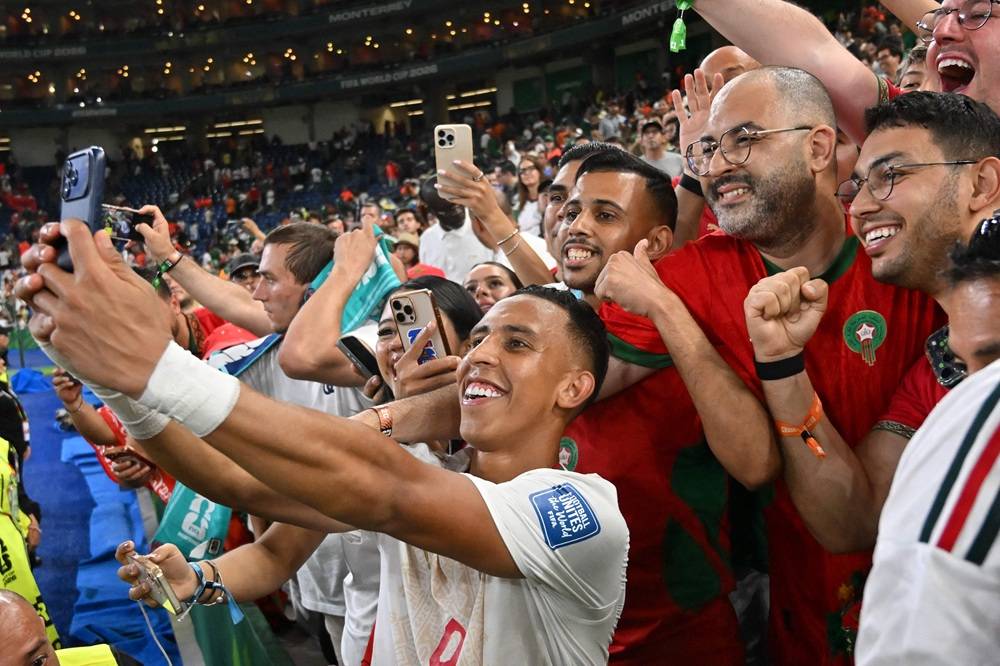
“Moroccan players in Morocco believe in themselves, the supporters, the fans believe in us as well. It’s so important. They’re demanding, but it’s because they know just how far we can go,” he said.
Morocco face co-hosts Canada in the last 16, with a potential quarter-final meeting with France looming on the horizon.
Ouahbi said there would be no question of complacency against Canada.
“We know that it’s game after game, and people think that it’s kept to be easy for us, it’s going to be a walk in the park for Morocco, which is not the case. Canada is a team that is going to be difficult for us.”
But Ouahbi said Morocco could go even further than the 2022 team if they fired on all cylinders.
“What we need to be telling ourselves is no one can stop us,” he said. “We’re unstoppable if we play the football that we know how to play.
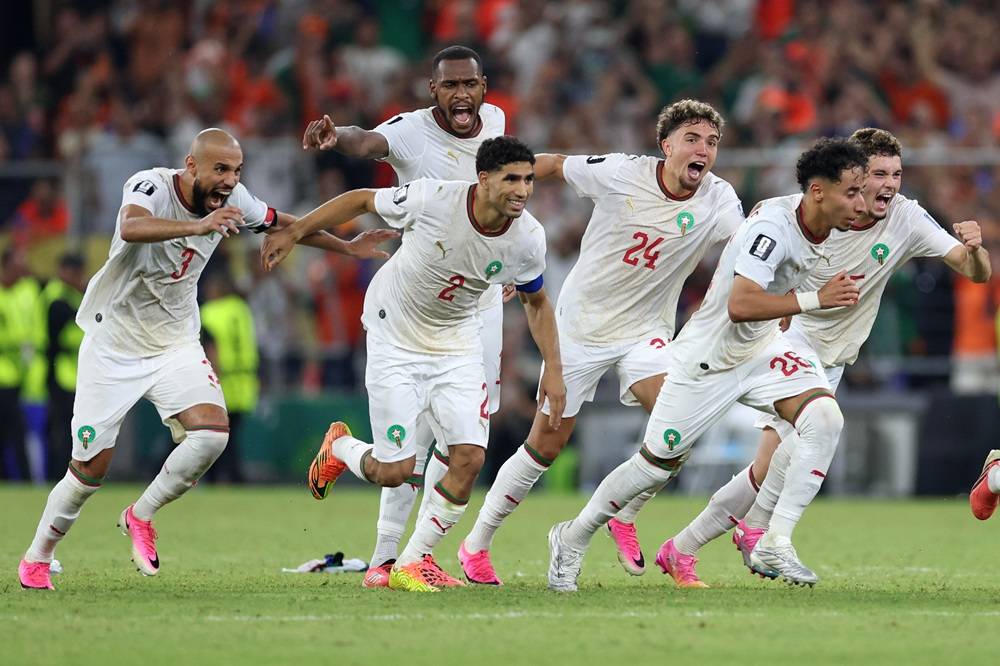
“But nobody is unbeatable. And I tell my guys that as well. If we get things wrong, we’ll go home, and we need to ensure that we have all the tools that we’re using, the tools in our arsenal to go as far as we can, and that’s the mentality that we want all of our players in Morocco to have.”
Netherlands coach Ronald Koeman meanwhile said Morocco’s emergence reflected the quality of African football.
“It’s very clear watching this World Cup that African teams have greatly improved in tactical sense, and also in the way they play their matches,” Koeman said.
“Morocco is the country that, in terms of talents, really generates good players, young players that continue to join the major clubs in Europe. It’s not without a reason why they have a higher ranking than the Netherlands.”


Leave a comment